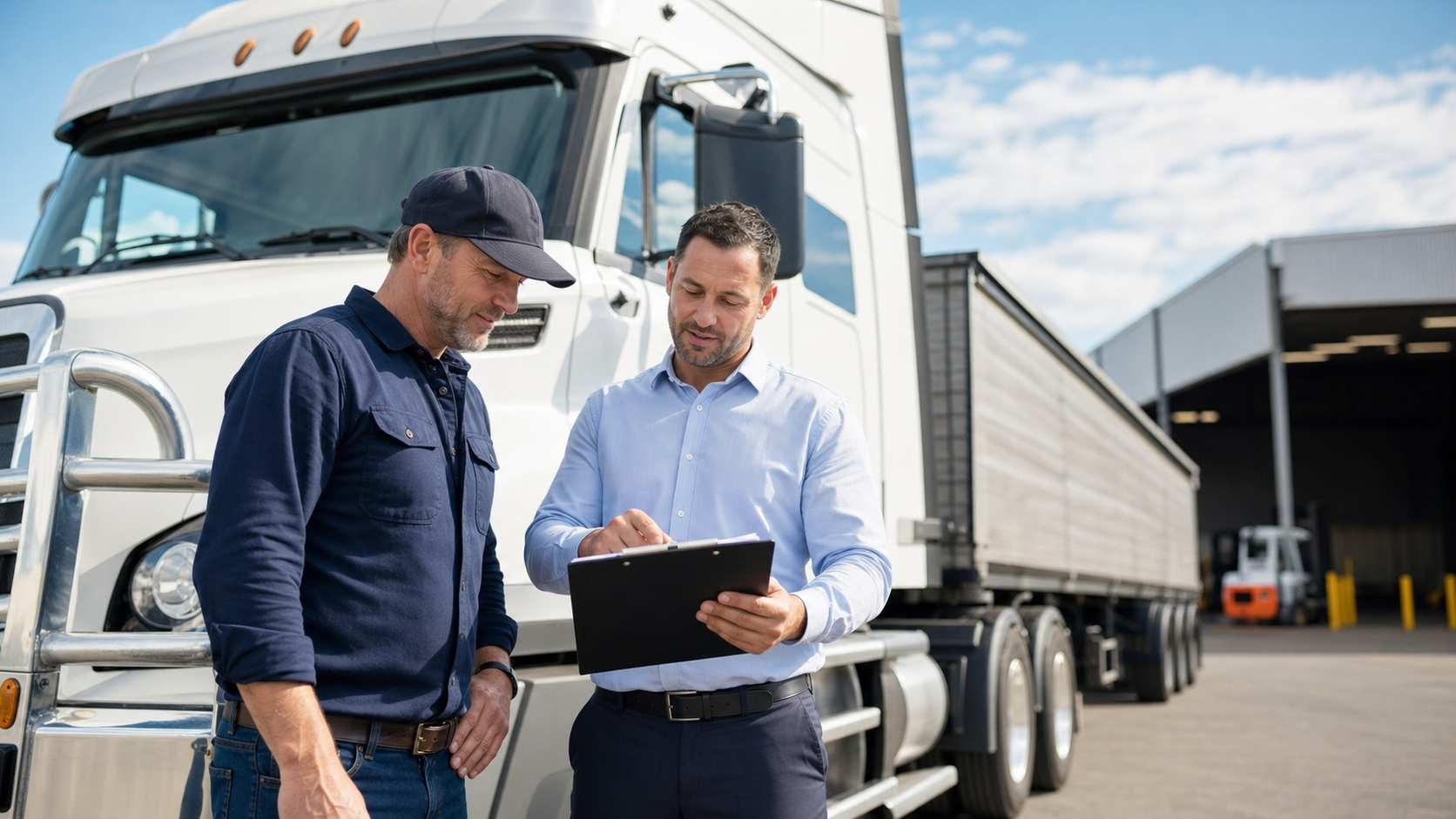
A practical guide for owner-drivers and transport operators preparing a truck or trailer finance application. This guide is written in original Figure Out Finance wording for Australian business owners and self-employed applicants who want practical context before speaking with a lender.
Truck and borrower fit
Truck finance is assessed as a combination of the asset, the borrower and the business use. Lenders want to understand whether the truck suits the applicant’s work, whether the applicant has the experience to operate it, and whether the repayment fits the expected income.
An owner-driver buying a first prime mover is assessed differently to an established transport company adding another trailer. A tipper used for civil work is different to a refrigerated truck or linehaul prime mover. The story behind the purchase matters.
The clearer the link between the truck and income, the easier it is for a lender to understand the request.
Transport income and contracts
Transport income can come from contracts, subcontractor arrangements, regular routes, project work or spot work. Lenders may want to see bank statements, invoices, contracts, work history or financials depending on the application.
Stable income and relevant experience can support the application. If income is seasonal or project-based, the application should explain how repayments will be managed during quieter periods.
For WA operators, mining, civil, agriculture and regional freight work can create strong opportunities but also uneven cash flow. The finance structure should reflect that reality.
Ready to review your finance options?
Tell us what you are looking to fund and we’ll help you understand suitable options from our lender panel.
Finance is subject to lender approval, credit criteria, fees, charges, terms and conditions.
Asset age, kilometres and valuation
The truck’s age, kilometres, condition and value are major assessment points. Lenders may be more cautious with older trucks, high-kilometre vehicles or specialised assets where resale value is harder to confirm.
Dealer purchases can be easier to verify, but private sale trucks may still be considered with additional checks. The lender may request invoice details, registration, VIN/chassis information, valuation or inspection information.
A truck that is fit for purpose and priced realistically is easier to assess than one where value or condition is unclear.
Deposit and equity position
Deposit or trade-in equity can influence lender comfort. Some strong applicants may access higher loan-to-value options, while first-time operators, older assets or unusual trucks may require more contribution.
A deposit reduces the funded amount and can improve the risk position, but it also uses cash that may be needed for fuel, insurance, repairs, tyres and working capital.
The right deposit level should be considered alongside the business cash-flow plan, not treated as a single yes/no number.
Credit profile and current debts
Lenders review existing debts and repayment history. Current vehicle loans, equipment finance, credit cards, overdrafts, tax debt and personal commitments can all affect servicing.
A clean repayment history can support the application. If there have been issues, it is better to explain them early and identify lenders that may still consider the scenario.
Multiple credit enquiries or undisclosed debts can slow the process. A broker helps position the application with suitable lenders rather than sending it randomly.
Documents lenders commonly request
Common documents include driver licence or ID, ABN and entity details, truck invoice or sale contract, bank statements, BAS or financials where required, existing finance statements, payout letters for refinance and insurance before settlement.
If the truck will be used under a contract, evidence of that work can help. If the operator is upgrading from an existing truck, details of trade-in, payout and repayment history may be relevant.
Documents requested will depend on the lender, loan type and applicant profile.
How to prepare the application
Before applying, confirm the truck, price, supplier, deposit, intended use, expected income source and preferred term. If a balloon is requested, understand the end-of-term plan.
Prepare a short explanation of why the truck is needed and how it will generate income. This is especially useful for first-time owner-drivers or businesses moving into a new type of transport work.
Figure Out Finance helps compare suitable truck finance options and explain lender requirements before submission.
Practical example: owner-driver versus fleet operator
An owner-driver buying a first prime mover may need to show industry experience, expected contract income, deposit and a realistic allowance for fuel, tyres, insurance and maintenance. A fleet operator adding a replacement truck may instead rely more heavily on trading history, existing contracts and prior repayment conduct.
Both applicants may be buying a truck, but the lender assessment is not identical. The first application needs confidence around the borrower stepping into ownership. The second needs confidence that the new asset fits established operations and does not overload existing commitments.
WA transport context
For Western Australian transport operators, distance and industry exposure can matter. A truck working regional freight, mining support, agriculture, construction or metro delivery may face different income patterns and running costs. Lenders may not know the details unless the application explains them.
This is why the finance request should include practical context around routes, contracts, customer base and how the truck will be used. A well-explained application helps the lender see the truck as an income-producing asset rather than just a vehicle purchase.
FAQs
Related finance guides
Continue reading related Figure Out Finance guides or return to the main service page.